
Choosing granite slabs for your kitchen involves much more than picking a color you like. Every slab features unique patterns, natural mineral variations, and structural characteristics that affect both appearance and long-term performance. Taking time to compare options helps you create a kitchen that reflects your style while standing up to years of everyday use.
Granite remains one of the most popular countertop materials because it offers natural beauty, impressive durability, and lasting value. Before making a final decision, it helps to understand how different slabs vary in color, movement, finish, thickness, and maintenance requirements. Knowing what to look for also makes conversations with your countertop fabricator much more productive.
Why Granite Remains a Popular Kitchen Countertop Material
Granite forms naturally over millions of years, giving every slab distinctive colors and veining that manufactured materials cannot duplicate. Since no two slabs look exactly alike, homeowners enjoy a one-of-a-kind finished kitchen.
Granite also performs well in busy households. The material resists scratches, tolerates heat, and holds up against everyday cooking activities when homeowners maintain it properly. Those qualities make granite an excellent investment for kitchens that receive frequent use.
Beyond performance, granite complements many design styles. Traditional, farmhouse, transitional, contemporary, and modern kitchens can all benefit from the right slab selection.
How Much Variation Should You Expect?
Natural stone always includes variation. Some slabs feature consistent coloring with subtle speckles, while others display dramatic veins, flowing movement, and bold mineral deposits.
Many homeowners fall in love with a small sample before visiting a showroom, only to discover that the full slab looks quite different. Viewing the complete slab provides a much better understanding of how the finished countertops will appear after fabrication.
Large patterns may create a dramatic focal point, while quieter designs produce a more understated appearance. Neither option works better than the other. Personal preference and overall kitchen design should drive the decision.
Which Granite Color Works Best?
Color often becomes the first consideration during countertop shopping. Granite comes in a wide range of shades, including:
- White
- Black
- Gray
- Brown
- Gold
- Green
- Blue
- Beige
- Mixed earth tones
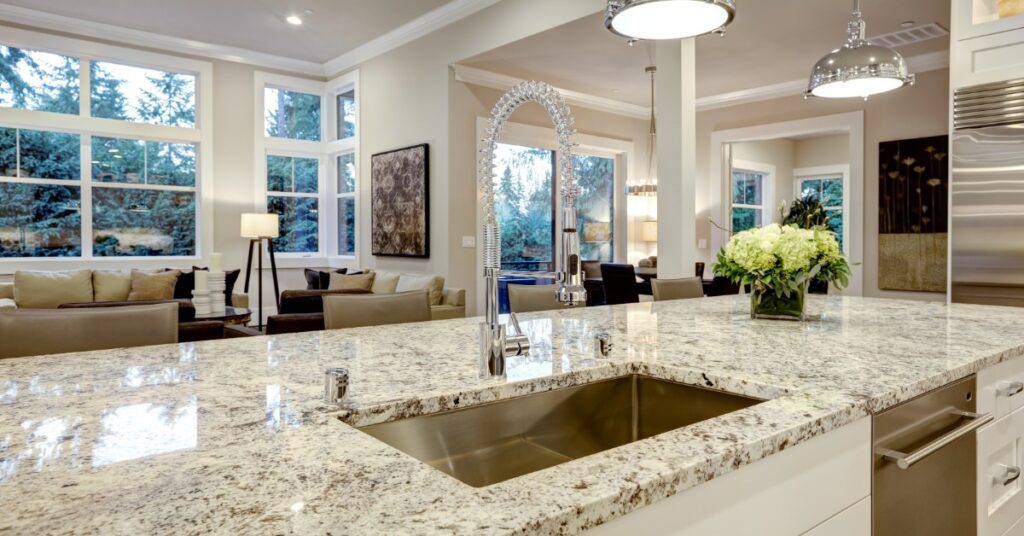
White and light-colored granite helps smaller kitchens feel brighter and more open. Dark granite creates striking contrast against lighter cabinetry and often hides minor crumbs between cleanings. Mid-tone colors offer versatility because they pair well with many cabinet finishes and flooring materials.
When comparing colors, view each slab under lighting conditions similar to your kitchen whenever possible. Natural sunlight and indoor lighting can affect how colors appear throughout the day.

Should You Match Your Cabinets First?
Cabinets and countertops should complement one another without competing for attention.
If your cabinets already exist, bring cabinet door samples to the showroom. Comparing materials side by side allows you to identify combinations that work naturally together.
For brand-new kitchens, some homeowners choose granite first because the slab serves as the room’s centerpiece. Cabinet colors, backsplash selections, flooring, and paint can then coordinate with the countertop’s natural beauty.
Keeping all finish selections together during the planning process creates a more cohesive final result.
What Veining and Movement Mean
Movement refers to the flow of colors, veins, and mineral patterns throughout the slab.
Low-movement granite features a more uniform appearance with evenly distributed minerals. Many homeowners prefer this style for minimalist or contemporary kitchens.
High-movement granite contains sweeping veins, bold color transitions, and dramatic visual interest. These slabs often become statement pieces that draw immediate attention.
Neither style offers better quality. The decision depends entirely on the overall design vision for the kitchen.
Why Viewing the Full Slab Matters
Small countertop samples provide only a limited glimpse of a natural stone.
Since granite forms naturally, one corner of a slab may contain entirely different characteristics than another. Large veins, color transitions, and unique mineral deposits often appear only when viewing the complete slab.
Walking through a stone showroom allows you to compare multiple slabs side by side while identifying the exact piece that fits your project.
Many homeowners appreciate selecting the actual slab that will become their kitchen countertops because they know exactly what to expect before fabrication begins.
How Thickness Affects Appearance and Performance
Granite slabs typically come in several standard thicknesses. Thicker slabs often create a more substantial, luxurious appearance around kitchen islands and countertop edges.
Fabricators can also create decorative edge profiles that enhance the finished design. Popular options include eased edges, bevels, ogee profiles, and mitered edges.
Your countertop professional can recommend the most appropriate thickness based on your kitchen layout, cabinetry, and design goals.
What Finish Should You Choose?
Granite offers several finish options that influence both appearance and feel.
A polished finish creates a glossy surface that highlights the stone’s colors and natural depth. Many homeowners choose polished granite because it reflects light and creates an elegant appearance.
A honed finish produces a smooth matte surface with less shine. Some homeowners prefer this softer look for modern or transitional kitchens.
Leathered finishes add subtle texture while preserving much of the stone’s natural character. The finish creates visual interest and offers a distinctive feel without becoming overly rough.
Viewing multiple finishes in person helps determine which option best complements your home’s overall style.
How Durable Is Granite?
Granite ranks among the hardest natural countertop materials available for residential kitchens.
With proper sealing and routine care, granite withstands everyday meal preparation, cookware, and frequent family use. Although granite offers impressive durability, homeowners should still use cutting boards to protect both knives and countertop surfaces.
Promptly cleaning spills also helps preserve the stone’s appearance over time. Simple daily maintenance supports long-lasting beauty without requiring complicated cleaning routines.
Many homeowners appreciate granite because it balances luxury with practical everyday performance.
Why Professional Fabrication Makes a Difference
Even the most beautiful slab depends on skilled fabrication and installation.
Professional fabricators carefully measure the kitchen, create accurate templates, cut openings for sinks and cooktops, polish exposed edges, and install each countertop with precision.
Experienced professionals also help position natural veins and movement for the most attractive finished appearance. Strategic layout decisions can dramatically improve the final result.
Choosing custom granite countertops allows homeowners to maximize both the beauty and functionality of every slab by tailoring the finished product to the kitchen’s exact dimensions and design goals.
How to Prepare Before Visiting a Stone Showroom
A little preparation makes slab selection much easier.
Before visiting a showroom, gather:
- Cabinet door samples
- Flooring samples
- Paint swatches
- Backsplash materials if already selected
- Kitchen dimensions or design plans
Bringing these items allows you to compare finishes together while making more confident design decisions.
Photographs of your current kitchen can also help designers recommend slabs that complement your existing space.
What Questions Should You Ask Before Choosing a Slab?
Topics worth discussing include fabrication timelines, sealing recommendations, edge profile options, maintenance expectations, warranty information, and available slab inventory.
Experienced design professionals can also explain differences between granite varieties, recommend finishes based on your lifestyle, and identify slabs that align with your renovation budget.
Open communication throughout the selection process helps avoid surprises while creating realistic expectations for the completed project.
Choosing Granite with Confidence
Granite offers timeless beauty, exceptional durability, and unmatched natural variation. Choosing the right slab requires more than selecting a favorite color. Homeowners should evaluate movement, finish, thickness, overall design compatibility, and fabrication quality before making a final decision.
Visiting a professional showroom, viewing full slabs, comparing materials under proper lighting, and working with knowledgeable fabrication experts all contribute to a successful kitchen renovation. Taking these steps allows you to select granite that complements your home’s style while delivering lasting performance for years to come.